
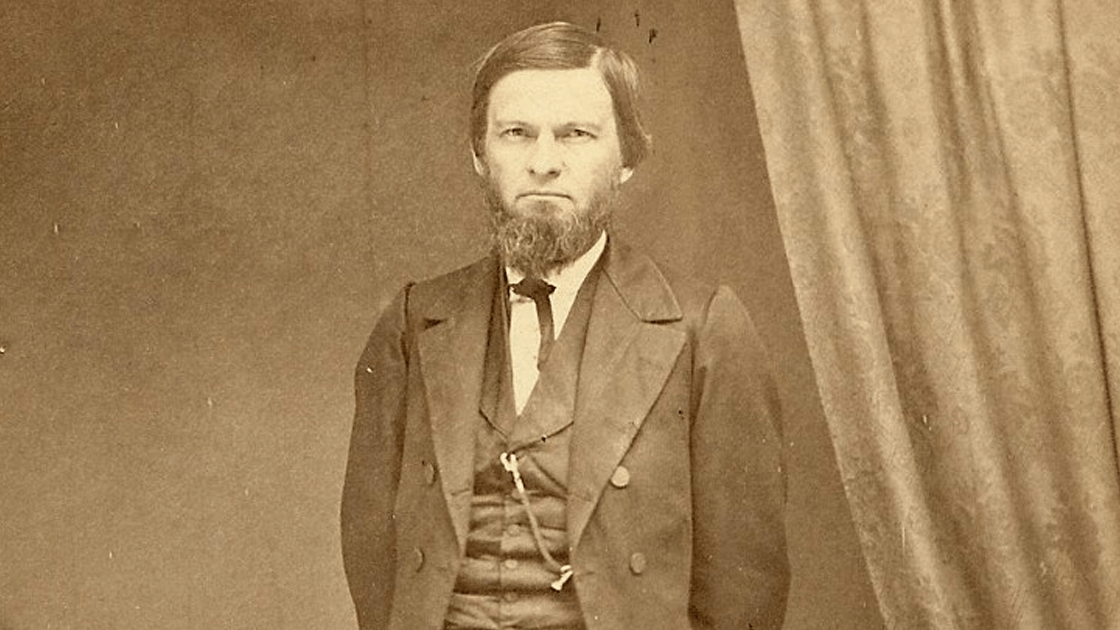
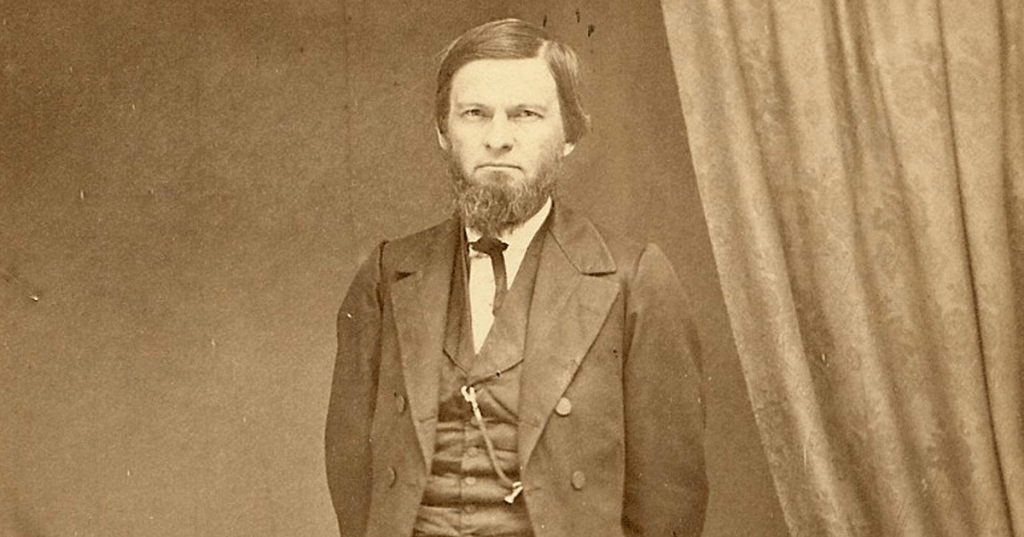
Recently I read through the most recent release of A Treatise on the Preparation and Delivery of Sermons, by John A. Broadus. The book was first released in 1870, at Broadus’ own expense. Several revised and republished versions have been released through the years. Reading the book for myself, I was struck by the applicability of Broadus’ instruction, given the fact that the book is now over 150 years old.
What follows are a few of my favorite quotes from Broadus’ classic work on preparing and delivering sermons.
- On how rare good preaching is … “But alas! how difficult we find it to preach well. How small a proportion of the sermons heard weekly throughout the world are really good … And yet in this work of ours, so awful and so attractive, so difficult and solemnly responsible and yet so blessed, we ought to aspire after the highest excellence.”
- On how common preachers misinterpret texts … “It is a mournful fact that Universalists, Romanists, Mormons, can find an apparent support for their heresies in Scripture, without interpreting more loosely, without doing greater violence to the meaning and connection of the sacred text than is sometimes done by orthodox, devout, and even intelligent men.”
- On how to handle controversial topics … “It would seem to be a just principle, that a preacher should never go out of his way to find a controversial matter, nor go out of his way to avoid it. He who continually shrinks from conflict should stir himself up to faithfulness; he who is by nature belligerent, should cultivate forbearance and courtesy.”
- On the relationship of preaching and politics … “That truly pious men shall carry their religion into politics, shall keep religious principle uppermost in all political questions which have a moral character, is an unquestionable and solemn duty.”
- On preaching the funeral of a non-Christian … “If the deceased did not give evidence of being regenerate, a believer in Christ, let us say nothing about his eternal future, nothing whatever.”
- On preaching that moves people … “It is a matter of universal observation that a speaker who would excite deep feeling must feel deeply himself … Alas, it is often our chief difficulty in preaching to feel ourselves as we ought to feel.”
- On the need for a big idea in expository preaching … “What not is the prime requisite to the effectiveness of an expository sermon? Our answer must be, unity. Unity in a discourse is necessary to instruction, to conviction, and to persuasion.”
- On preachers who aim to entertain … “Some preachers care too much for embellishment. They take a wrong view of their office, or at any rate are influenced by a wrong motive. They aim too much at entertaining, at gratifying the audience. They do not feel the seriousness of their work, the solemnity of their position.”
- On the physical demands of preaching … “The preacher should be careful of his health, not only on other accounts, but because speaking, real speaking, demands a high degree of nervous energy and power of endurance.”
- On the preacher’s personality … “Above all, be yourself.”
- On leading public prayer … “The prayers form the most important part of public worship. He who leads a great congregation in prayer, who undertakes to express what they feel, or ought to feel, before God, to give utterance to their adoration, confession, supplication, assumes a very heavy responsibility. We all readily agree, and sometimes partially realize, that it is a solemn thing to speak to the people for God; is it less so when we speak to God for the people?”
- On the preacher’s dependence on the Holy Spirit … “After all our preparation, general and specific, for the conduct of public worship and for preaching, our dependence for real success is on the Spirit of God.”
- On the preacher’s character … “What a preacher is, goes far to determine the effect of what he says.”
 Regular Pastor
My husband and I had a conversation this past weekend about the question of preachers or pastors avoiding hard topics. The specific topic we were discussing was birth control and what the Bible really says or doesn’t say about it. I have thought ( notice I said thought and not know) many Catholics do not believe in using birth control other than abstinence. The conclusion that I came to as to why pastors don’t really broach the subject is because, maybe, like the topic of divorce, it is not stated black or white, or is it we don’t like what is stated black and white, and so we avoid it altogether???? Please correct me if I am wrong, because I know I don’t have the Bible knowledge that many do. I just like to grapple with ideas and thoughts, wanting to know God’s thoughts and not mine.
LikeLike
To go back to Broadus – I think a few (online) make a living by only talking about controversial subjects – while the majority in evangelical churches draw a crowd by never talking about controversial subjects … On birth control, you’re right, Catholics have a history of being opposed to birth control based on their consistent value for life (Protestants at one point tended to be pro-abortion), and their long-standing view of the telos (end, goal) of marriage as procreation. Add to that, the Bible says little directly on the subject, and it rarely “comes up” in preaching. It’s the kind of topic that would be helpful to discuss from time to time, even if a black-and-white conclusion isn’t reached.
LikeLike