

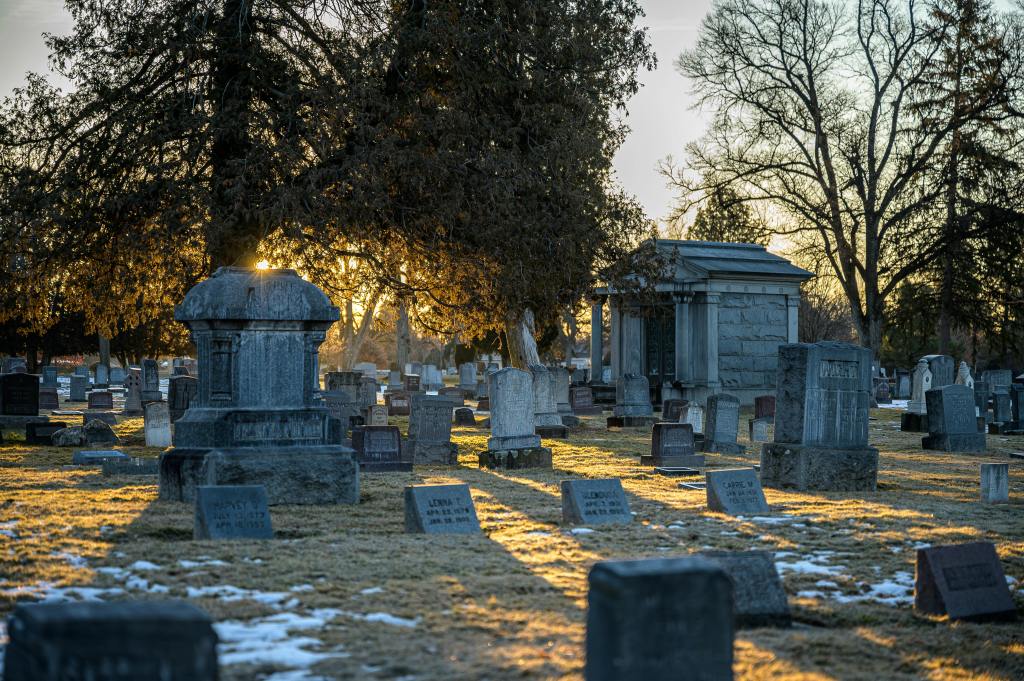
One of the great honors of regular pastoral ministry is officiating a funeral. It is a high and holy privilege to walk with a family through the loss of a loved one and the planning of a funeral service. This is a serious time when people are thinking about serious things. It is a time that should not be wasted.
Often, in the planning of a funeral, families say things like this … “We don’t want to have a funeral, we want to have a celebration of life” … “We don’t want anything too sad or weepy, we want something happy” … “We don’t want a big production, just something very simple.”
To be sure, I understand what families mean when they say these things. I’m all for celebrating life – especially a life that was well-lived and honoring to the Lord. I’m not dead set on trying to make a funeral entirely depressing and mournful. And I certainly don’t think a funeral has to involve any kind of big, over-the-top production.
However, I think we should have “funerals.” The world funeral comes from a Latin word that means “dead body.” We have funerals because someone has died. Yes we celebrate their life – but the funeral service isn’t a birthday party – it’s a funeral. Furthermore, I think funerals should be sad. Let me explain.
- For one thing, funerals are an opportunity for family and friends of the deceased to express grief and experience closure. There is a heavy finality to death, and a funeral service is a formal opportunity to experience that finality. Of course, we want to honor the deceased, celebrate the impact they made on our lives, and give thanks for the time we had with them. However, trying to remove the sadness from a funeral deprives family and friends of the opportunity to continue the grieving process. Sadness and sorrow is an inevitable part of the grieving process, and funeral services are a time to experience and express this pain.
- Secondly, as stated above, funerals take place when a person has died. Contrary to what many might try to tell you – death is sad. It’s always sad. Even when your sadness is mixed with hope and relief and joy, death is always sad. Death is sad for the non-Christian because this life is our only opportunity to repent of our sin and believe in Jesus. Death is sad for the Christian because death is a yet-to-be-defeated enemy. Death is sad for loved ones because our loved one is no longer with us. Death is sad for estranged family and friends because the opportunity to reconcile has passed. Death is always sad, and a funeral should honestly recognize the sadness that is wrapped up in death.
- Last, funerals remind us that one day we will die. This is an important reality that we all need to be reminded of from time to time. This is the reason the author of Ecclesiastes insists that the house of mourning is better than the house of rejoicing – because life is short, hebel, a breath, a mist, a vapor, smoke. It’s here today and gone tomorrow. Of course, no one really wants to die, nor do we enjoy thinking about the certainty of our own death. Such thoughts often leave us feeling anxious and sad. Nevertheless, from time to time, we need to think about such things so that we can live our lives today in light of the certainty of death and the hope of eternity. A funeral that tries to replace sadness with laughter misses this opportunity.
The next time a loved one dies or the next time you attend a funeral, consider the following suggestions. First, remember that is normal and right to feel sadness at a funeral. It’s also healthy to express your sorrow in an appropriate way. Ignoring these feelings of sorrow in the name of “celebration” only delays the inevitable grieving process. Second, learn how to lament. The book of Psalms is filled with examples of God’s people taking their sorrow to the Lord in the form of a lament. We are naturally good at complaining, but lamenting is something we have to learn. Third, grieve and grieve with hope. Of course we have incredible hope as believers, but we still experience grief. Grieving with hope doesn’t mean celebrating the horror of death. Grieving with hope means embracing the sadness that comes with death even as we fix our eyes on Jesus.
 Regular Pastor