
Win One … The Passage of the Mohler Amendment
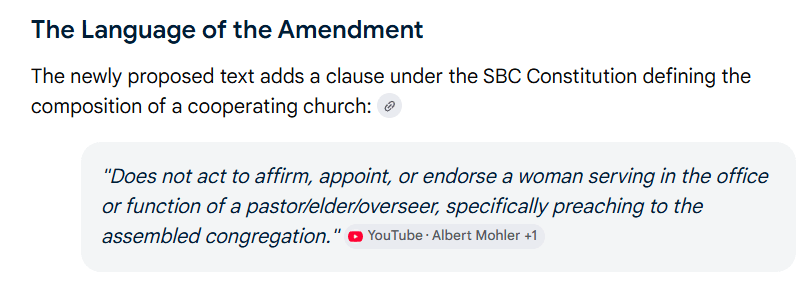
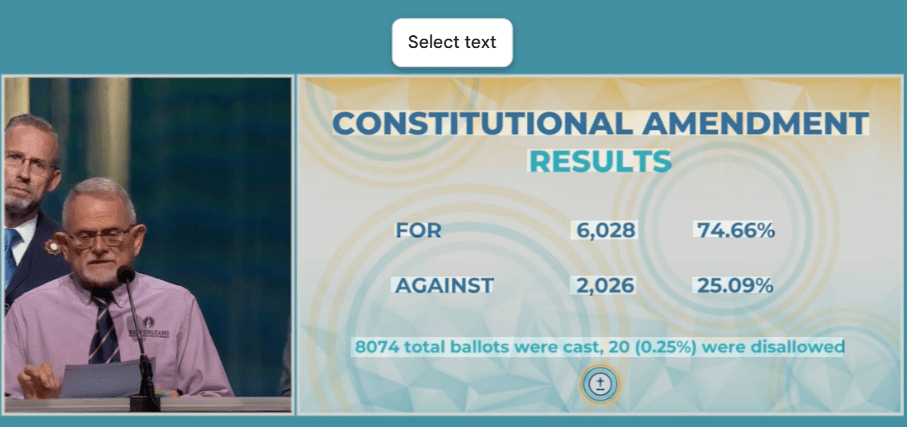
Similar amendments had been brought by Mike Law and Juan Sanchez in previous years. Those amendments did not garner enough support to pass. The Mohler amendment was adopted with almost 75% supporting the proposal. Contrary to widespread reporting (and lamenting), this amendment changed absolutely nothing in the SBC. Rather, this amendment brought clarity to an issue that has become both confusing and divisive. Opponents insisted the issue was already settled – it is not. Supporters cheered, and some argued that this issue is now settled – it is not – the amendment needs to be passed again next year in Indianapolis, and the amendment needs to be “implemented” by the credentials committee. Still, for all the pending uncertainty, the passage of the Mohler amendment was a win.
Win Two … The Election of Willy Rice
As usual, there were lots of videos and interviews and posts leading up to the election. In one forum, the Willy Rice and Josh Powell were asked what separated them as candidates – what made them different? Willy Rice said it was his willingness to challenge the system without dismantling the system. This is the very reason many people supported Willy Rice – we don’t want to burn the system to the ground – but we also don’t want the system to go unchallenged.
Win Three … The Passage of Resolution 9
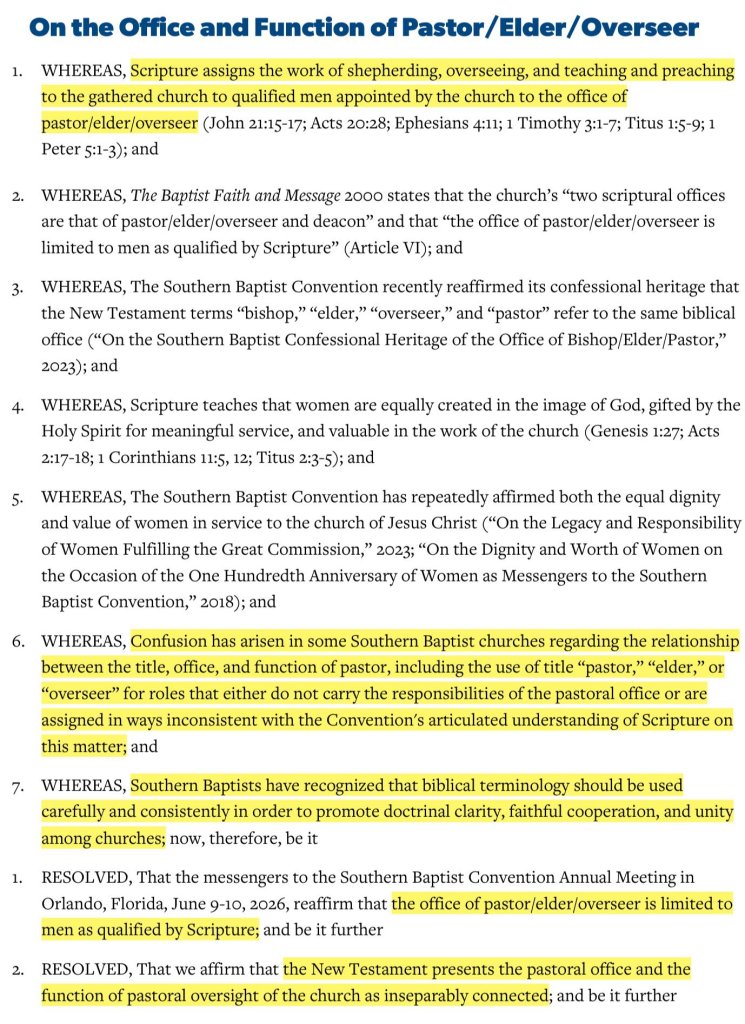
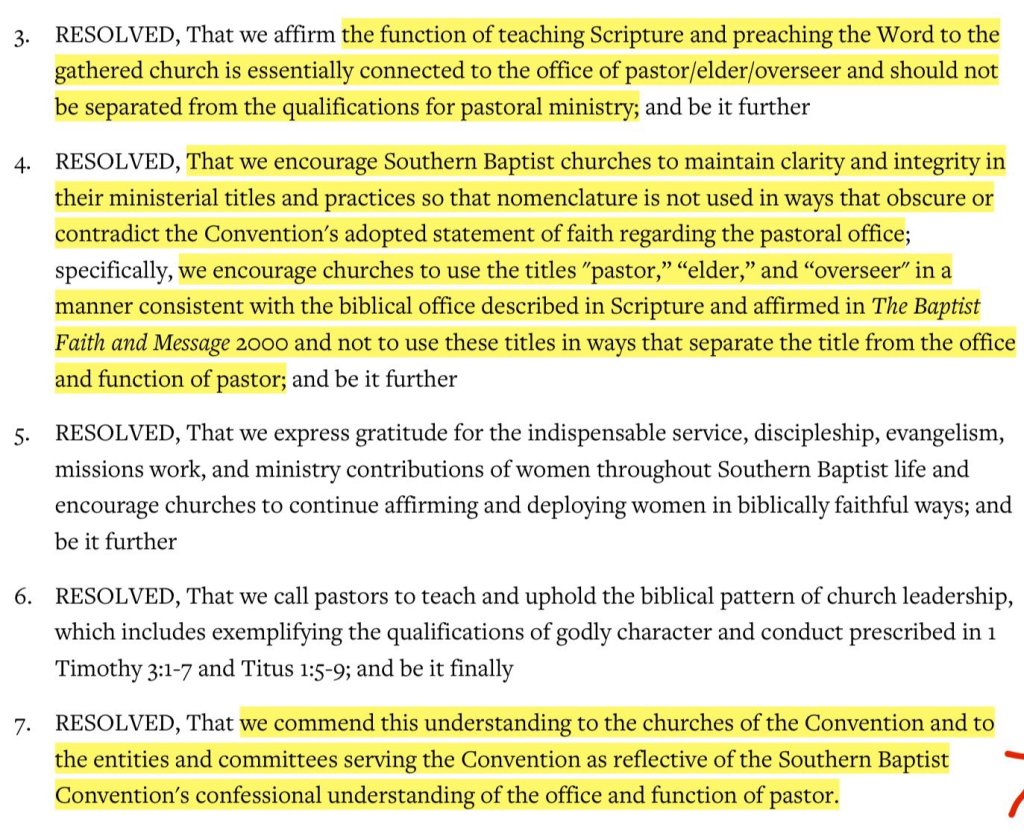
This resolution offered additional clarity to how the SBC understands the office, title, and function of pastor. The resolution was passed with a clear majority, and the resolution offers additional clarity and advice for churches who have slipped into the unbiblical practice of handing out the title “pastor” to everyone on staff – women included. Again, the passage of this resolution ought to offer our credentials committee additional clarity about how Southern Baptists want to define “friendly cooperation” when it comes to the question of pastor (elder, overseer). Even better, this resolution encourages churches to give biblical consideration to this issue if they are not aligned with Scripture. To be clear, no one is arguing that this is a first order issue – but it certainly is a second order issue, one that has a direct impact on the ability of individual, autonomous churches to cooperate together in missions and church planting.